Why Did Medieval Knights Fight Snails? Competing Theories
Why did medieval knights fight snails in manuscript illustrations? They probably did not: the images are playful, symbolic scenes in decorated manuscripts. Historians have offered several explanations for the odd pairing—social satire, an inversion of courage and weakness, visual jokes and religious or political associations—but there is no single meaning proven for every manuscript.
Knights squaring off against giant snails appear particularly in marginal illustrations from the thirteenth and fourteenth centuries. The striking contrast between an armoured warrior and a soft, slow animal helps explain why the motif was memorable then—and why modern readers share it now. For broader context, see our guide to medieval marginalia.
Where Do We Actually Find Knight-versus-Snail Pictures?
The British Library highlights a late-thirteenth-century English genealogical roll, Royal MS 14 B V, where a knight confronts a snail. Another well-known example comes from Harley MS 6563, a Book of Hours showing men warding off—and even surrendering to—snails.
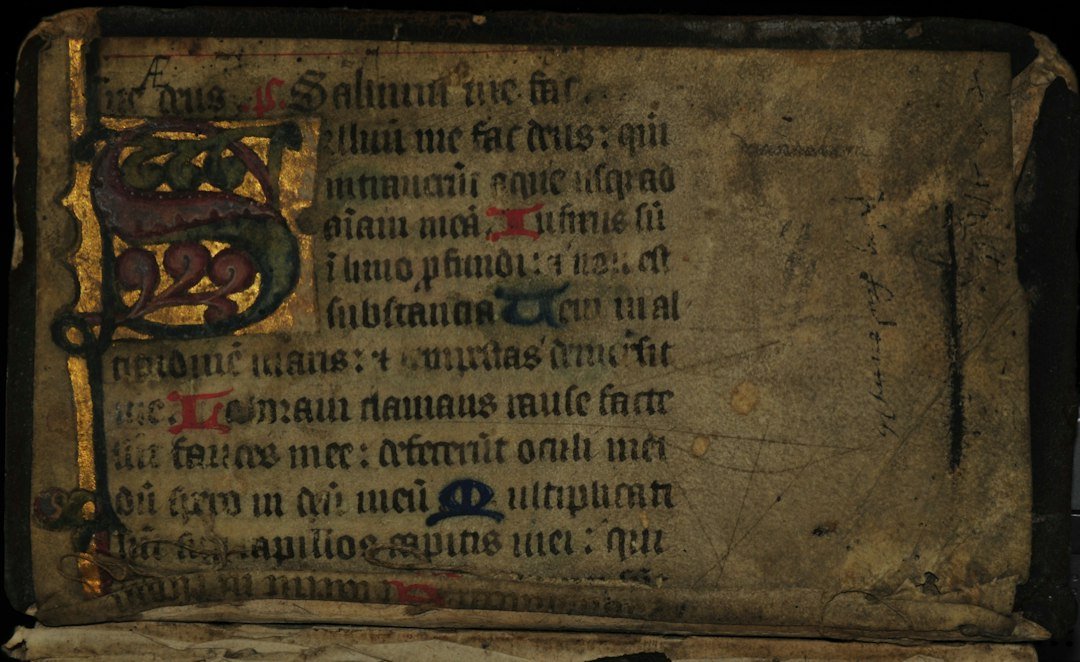
These are not battle reports. They occur in the margins alongside scriptural, historical or devotional text, where artists were free to make visual comments, contrasts and jokes. The images may be amusing, but that does not prove they are meaningless.
Four Competing Explanations for Snail Combat
1. A joke about courage and cowardice
A knight is meant to be brave. A snail looks like an absurdly weak opponent. Showing the armoured hero retreating from a mollusc turns social expectations upside down: the dangerous warrior becomes frightened, and the harmless animal becomes a monster. Bangor University’s discussion emphasizes the motif’s satirical potential.
2. The snail as a social or political symbol
One influential proposal links some snail images to medieval hostility toward particular social groups or perceived outsiders. Such interpretations must be treated as hypotheses, not universal translations. Symbols can change across countries and centuries, and a modern summary can easily erase the manuscript-specific evidence needed to support a claim.
3. A comment about strength and vulnerability
Snails carry protective shells. In literature and popular imagination they can suggest resilience, caution, sluggishness or deceptive power. A warrior’s confrontation with an unlikely foe may play with these reversals. But a snail’s shell alone cannot tell us which meaning the artist intended.
4. An entertaining marginal joke
Some images may work much like a visual gag: improbable scale, a comic surrender, or a recognizable recurring character. Medieval manuscript margins regularly depict hybrids, animals behaving as people, and role reversals. A joke can also carry social commentary; the possibilities are not mutually exclusive.
What Does the New 2026 Snail Research Add?
Julia Pineau’s 2026 book Introducing the Medieval Snail widens the question beyond the knight motif. It examines snails in food, medicine, written sources, images and objects. Its chapter on the snail-combat motif considers the flexibility of the imagery and the connection between medieval marginal illustrations and the modern meme.
That matters because internet lists sometimes treat a single interpretation as settled. Looking at how snails appear across different genres and media helps separate an appealing theory from a documented recurring use.
How to Interpret One Manuscript Image Responsibly
- Identify the manuscript. Record the library, shelfmark, approximate date and origin if available.
- Inspect the page. Is the image in a religious manuscript, a legal text or a chronicle? What text surrounds it?
- Describe before interpreting. Is the knight attacking, retreating or yielding? How large is the snail?
- Compare similar examples. Does the same composition recur in other manuscripts, or is there an unusual detail?
- Separate proposal from proof. Write “one interpretation suggests” when scholars disagree.
For example, a knight surrendering in the margin of a Book of Hours could reasonably be described as comic role reversal. Claiming the scene was intended as an exact satire of a named group would require additional historical evidence.
FAQ: The Medieval Snail Meme
Were giant snails believed to be real medieval monsters?
The illustrations do not establish that anyone thought snails reached horse-sized proportions. Distorted scale is a common comic and symbolic device in manuscript art.
Does every snail mean cowardice?
No. Animal imagery varies by genre, era and context. Even repeated motifs need not carry precisely identical messages in every setting.
Are the drawings really medieval?
Yes. The British Library preserves identifiable manuscript examples. It is better to cite a shelfmark than to rely on an unattributed image reposted online.
Where to See and Read More
Read the British Library’s Knight v Snail and Ludicrous Figures in the Margin for manuscript examples; see Bangor University’s explanation for satirical interpretations; and consult the publisher’s description of Julia Pineau’s 2026 book. Our related medieval marginalia explainer places the snails among other manuscript creatures.