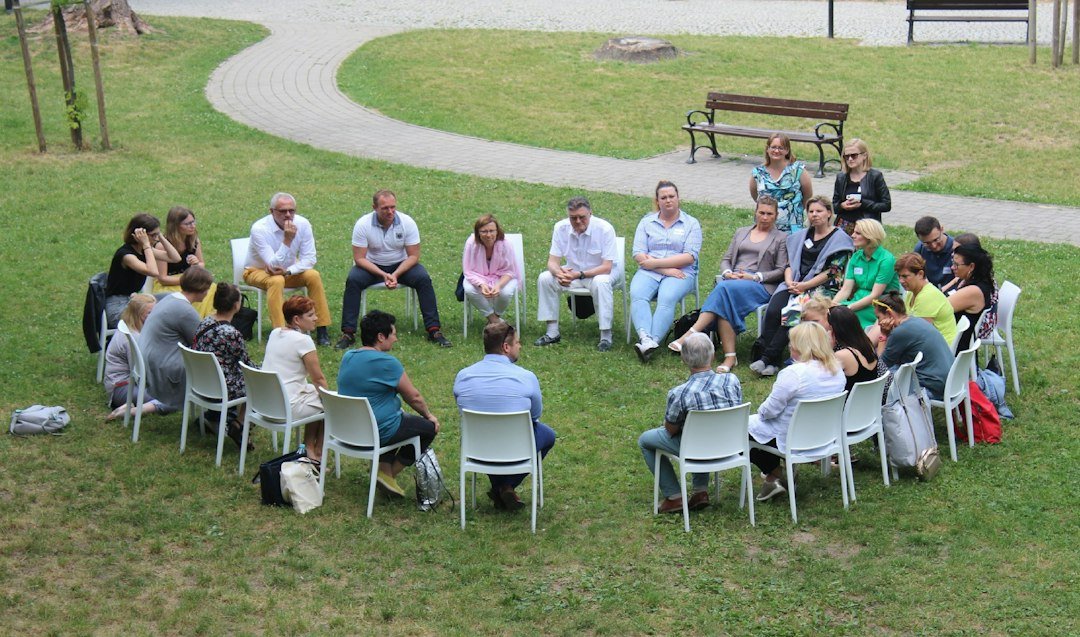
What Is Social Prescribing? Why Community Activities Are Entering Health Care
A doctor can prescribe medication, but many problems affecting health are not solved by medication alone. Loneliness, social isolation, lack of transportation, financial stress and limited access to meaningful activity can all shape wellbeing. Social prescribing is an attempt to connect health care more deliberately with community support.
The model is increasingly discussed in Canada, where programs may connect people with arts groups, physical activity, food supports, social services or local organizations.
What is social prescribing?
Social prescribing is a structured way of linking people with non-clinical community services and activities that may support their health or social needs. A health professional may refer someone directly to a program or to a “link worker,” navigator or community connector who helps identify appropriate resources.
The Canadian Institute for Social Prescribing, an initiative of the Canadian Red Cross, describes the model as connecting health care and community resources to support whole-person wellbeing.
What kinds of things can be socially prescribed?
Programs vary widely. Examples can include walking groups, community meals, arts programs, gardening, caregiver supports, peer groups, housing or income navigation and culturally specific services. The point is not that these activities replace medical treatment. They address needs that a prescription pad often cannot.
Cosmic Teapot has recently explored the value of third places and offline community spaces and the pressures behind the adult friendship recession. Social prescribing sits at the practical intersection of those social questions and health systems.
How does social prescribing work in Canada?
There is no single national program. Access varies by province, region and organization. Some initiatives begin with a family doctor, nurse or other regulated health professional; others allow referrals from social-service organizations or self-referral.
Canadian public-health research has examined models in which a non-clinical navigator works with a person to identify needs and connect them to local resources. The Canadian Institute for Social Prescribing notes that implementation is still uneven across the country.
Why are health systems interested in loneliness and social connection?
Social conditions can affect health behaviours, stress, mobility and a person’s ability to follow medical advice. Someone who is isolated may benefit from opportunities for regular contact and activity; someone who cannot access food or transportation may have barriers that a clinical appointment alone cannot fix.
That does not mean community activities cure disease. Social prescribing is better understood as a coordination model: it gives clinicians and community organizations a clearer pathway for responding to non-medical needs that still matter to health.
What does the evidence say?
Research is promising but heterogeneous. Programs differ in who they serve, what they prescribe and how outcomes are measured. A Canadian article on social prescribing and loneliness has argued that the approach can help connect people to arts, peer networks and physical activity, while government-supported evaluations have examined feasibility and implementation.
Because the evidence base is still developing, broad claims that social prescribing will save money or improve every health outcome should be treated cautiously.
What are the biggest practical challenges?
A referral only helps if a suitable community program exists, has capacity and is accessible. Transportation, cost, language and disability access can all limit participation. Community organizations also need stable funding if health systems are going to rely on them.
There is also a risk of medicalizing ordinary community life. A book club or gardening group has value even when it is not framed as a health intervention.
Why the idea matters
Social prescribing is ultimately about recognizing that health systems and communities solve different kinds of problems. The model tries to create a bridge between them rather than asking either side to do everything.
If it expands, its success will depend less on the phrase “social prescription” and more on whether people actually gain reliable access to useful local relationships, services and activities.
Sources and further reading
- Canadian Institute for Social Prescribing
- Public Health Agency of Canada: social prescribing implementation
This article is general information and is not medical advice. Availability and suitability of programs vary by person and region.