What Is Mechanochemistry? How Grinding Can Make Chemistry Greener
Mechanochemistry sounds like something out of a science-fiction lab, but the basic idea is surprisingly physical: instead of relying mainly on heat and liquid solvents to make molecules react, chemists use mechanical force. Grinding, crushing, milling, and friction can supply enough energy to push a chemical reaction forward.
The field is getting fresh attention because it could help make some kinds of chemistry cleaner. In 2026, researchers and chemistry organizations have highlighted mechanochemistry as a growing tool for solvent-free or solvent-minimized synthesis, recycling, materials recovery, and pharmaceutical chemistry.
What is mechanochemistry?
Mechanochemistry is the use of mechanical energy to trigger or accelerate chemical reactions. A common laboratory method uses a ball mill: reactants are placed in a sealed container with hard balls that collide with the material as the container shakes or rotates.
Those repeated impacts do more than mix ingredients. They can break bonds, create fresh surfaces, distort molecular structures, and help reactants contact each other in ways that make new reactions possible.
Why are chemists interested in it now?
Traditional chemistry often depends on large amounts of solvent. Solvents can be essential, but they also create waste, add separation steps, and may require substantial energy to recover or dispose of safely.
Mechanochemical reactions can sometimes work with little or no bulk solvent. That makes the approach attractive to researchers working on green chemistry and sustainable science.
Recent work has explored mechanochemistry for organic synthesis, polymer processing, battery-material recovery, biomass conversion, and chemical recycling. The American Chemical Society’s Chemical & Engineering News described broader adoption as an important opportunity for greener chemistry in 2026, while CAS has reported a steady rise in mechanochemistry research publications.
How does a ball mill cause a chemical reaction?
Imagine two powders that normally need to be dissolved in liquid before they can react. In a ball mill, constant collisions repeatedly crush and mix the powders. Each impact creates highly energetic contact points.
At those microscopic spots, pressure, deformation, heat, and newly exposed surfaces can lower the practical barriers that normally keep reactants apart. The exact mechanism depends on the materials, which is one reason mechanochemistry remains an active research field.
Is mechanochemistry always solvent-free?
No. Some reactions are performed completely dry, a method often called neat grinding. Others use a very small amount of liquid in a technique called liquid-assisted grinding. The goal is not necessarily to eliminate every drop of solvent, but to use far less than a conventional solution-based process when that improves efficiency and sustainability.
What can mechanochemistry be used for?
- Pharmaceutical synthesis: preparing useful molecules while reducing solvent use.
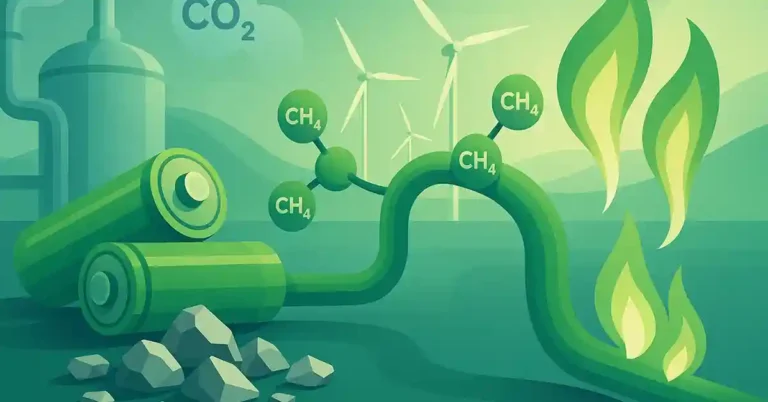
- Battery recycling: helping recover valuable materials from used batteries.
- Plastic recycling: breaking down or transforming polymers through mechanically driven chemistry.
- Catalysis: changing how catalysts are made and activated.
- Materials science: producing or modifying solids that can be difficult to make using solution chemistry.
Why isn’t all chemistry done this way?
Mechanochemistry has limitations. Researchers still need better ways to predict how force translates into chemical reactivity, compare results between different milling machines, monitor reactions while they happen, and scale laboratory methods into industrial processes.
That is part of what makes the field interesting right now: the underlying idea is old, but the tools, measurements, and sustainability goals surrounding it are developing quickly.
Could mechanochemistry make chemistry greener?
Potentially, yes, but not automatically. A greener process has to consider the whole system: energy use, equipment, raw materials, waste, reaction yield, purification, and scale. Mechanochemistry can reduce one major source of chemical waste, solvent use, but every process still has to be evaluated on its own merits.
Still, the trend is clear. As chemists search for ways to make useful molecules with less waste and fewer processing steps, mechanical force is becoming a serious part of the modern chemical toolbox.
More on mechanochemistry and greener chemistry
For related chemistry topics, read what deep eutectic solvents are and how spent batteries can help make renewable methane.