QTC Sensor With Arduino: Voltage Divider and Calibration
Learn how to read a QTC pressure sensor with an Arduino voltage divider, calculate sensor voltage, calibrate force readings and avoid common mistakes.
Physics explains forces, matter, energy, quantum ideas, space, measurement, and unusual physical phenomena without assuming an advanced technical background.
Learn how to read a QTC pressure sensor with an Arduino voltage divider, calculate sensor voltage, calibrate force readings and avoid common mistakes.
Compare QTC pills and sheets, including contact area, mounting, repeatability and how to choose a pressure-sensitive composite for a project.
Learn to interpret a QTC force–resistance curve, including steep response, logarithmic axes, loading cycles, hysteresis and practical calibration.
QTC is a type of force-sensitive sensor material—not an entirely separate category from force-sensing resistors. Compare their mechanisms and trade-offs.

Quantum accelerometers and atom interferometers could help vehicles navigate when GPS is unavailable. Here is what quantum navigation can—and cannot—do.

Spoiler: by the end, you’ll see that the quantum world is less like a terrifying math monster and more like a mischievous cat that refuses to stay in one box. 1. Quantum The VIP prefix itself! “Quantum” simply means the smallest possible chunk of something—energy, light, even information. 2. Superposition A quantum object can hang…
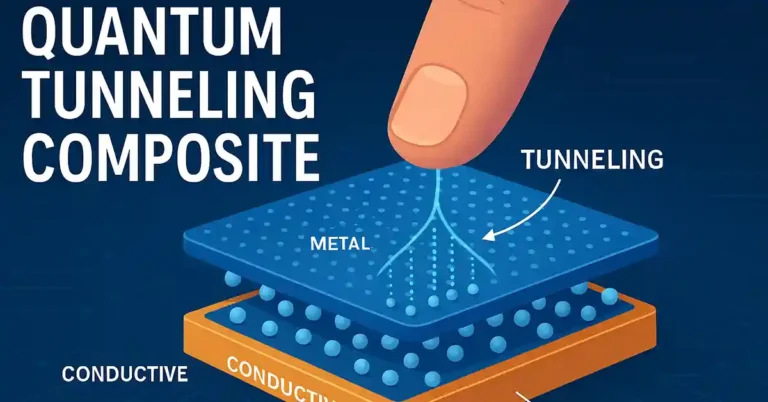
What is a quantum tunnelling composite (QTC)? It is a pressure-sensitive material made from an insulating, flexible polymer containing conductive particles, often nickel. Unpressed, the particles remain electrically separated; when the material is squeezed, tiny gaps narrow and electrons can tunnel between particles, causing a large drop in electrical resistance. QTC material is therefore useful…
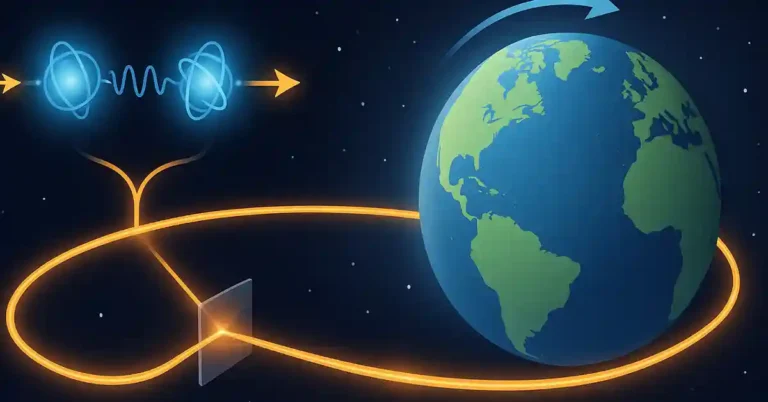
Measuring Earth’s Rotation with Quantum Entanglement: A Quantum Leap For over a century, scientists have used devices called interferometers to measure Earth’s rotation. Now, researchers at the University of Vienna have taken this a step further by using quantum entangled light particles, known as photons, to achieve the most precise measurement yet. Their groundbreaking experiment,…