Why Lunar Dust Is Such a Problem for Moon Missions
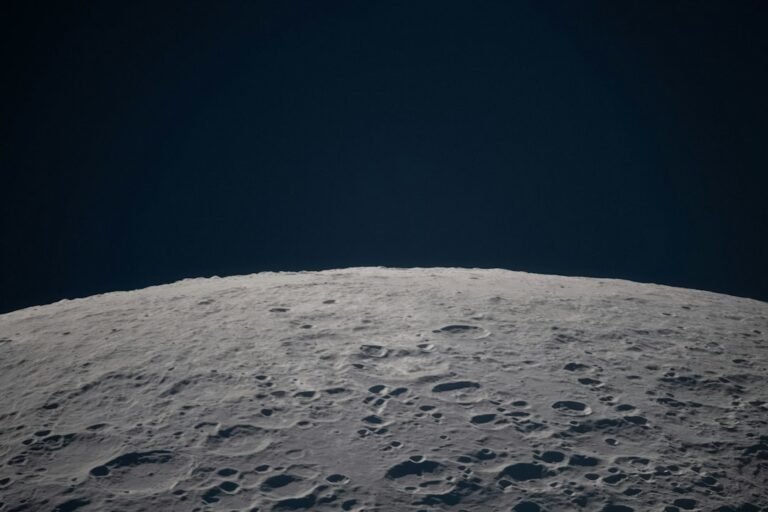
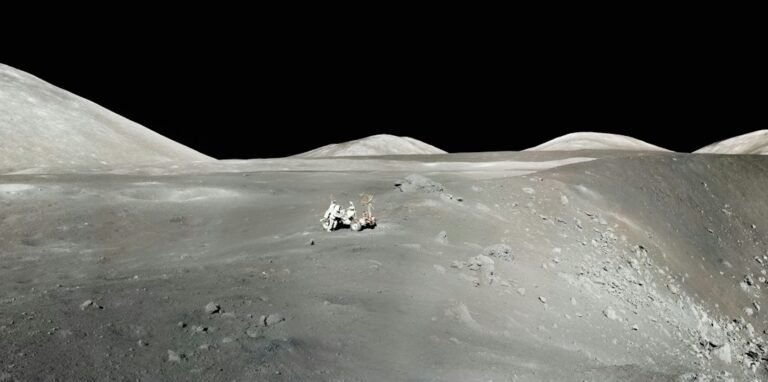
Lunar dust is one of the less glamorous problems facing Moon exploration. The Moon’s surface is covered with fine regolith created by billions of years of impacts, and its smallest particles can cling to equipment, move through mechanisms and become difficult to control.
Why lunar dust is a problem: what makes Moon dust different?
Earth’s sand and soil are continually weathered by wind and water. The Moon has neither process, so small grains can remain angular and abrasive. Solar radiation can also charge particles electrically, helping dust stick to surfaces.
What can lunar dust affect?
- Spacesuit joints, seals and fabrics.
- Optical instruments and cameras.
- Solar panels and thermal-control surfaces.
- Mechanical parts exposed to abrasive particles.
- Landing areas, where engine plumes can accelerate dust and small debris.
Why is NASA testing landing plumes?
In 2026, NASA continued plume-surface interaction tests to understand what happens when powerful lander exhaust strikes simulated lunar soil. The goal is to improve models for landing-site design and reduce risks to nearby hardware.
Can the dust problem be solved?
Researchers are exploring coatings, electrostatic removal methods, better seals, landing-pad concepts and operational strategies. No single fix addresses every situation, which is why dust mitigation is treated as a systems problem.
The bottom line
Future lunar bases will need to manage an environment where dust is persistent, abrasive and easily disturbed. Read our explainer on Coordinated Lunar Time for another infrastructure challenge created by sustained Moon exploration.
For another precision-measurement challenge in space, read how quantum entanglement was used to measure Earth’s rotation.