What Is Coordinated Lunar Time? Why the Moon Needs Its Own Clock
The Moon is about to get something surprisingly ordinary: a shared clock.
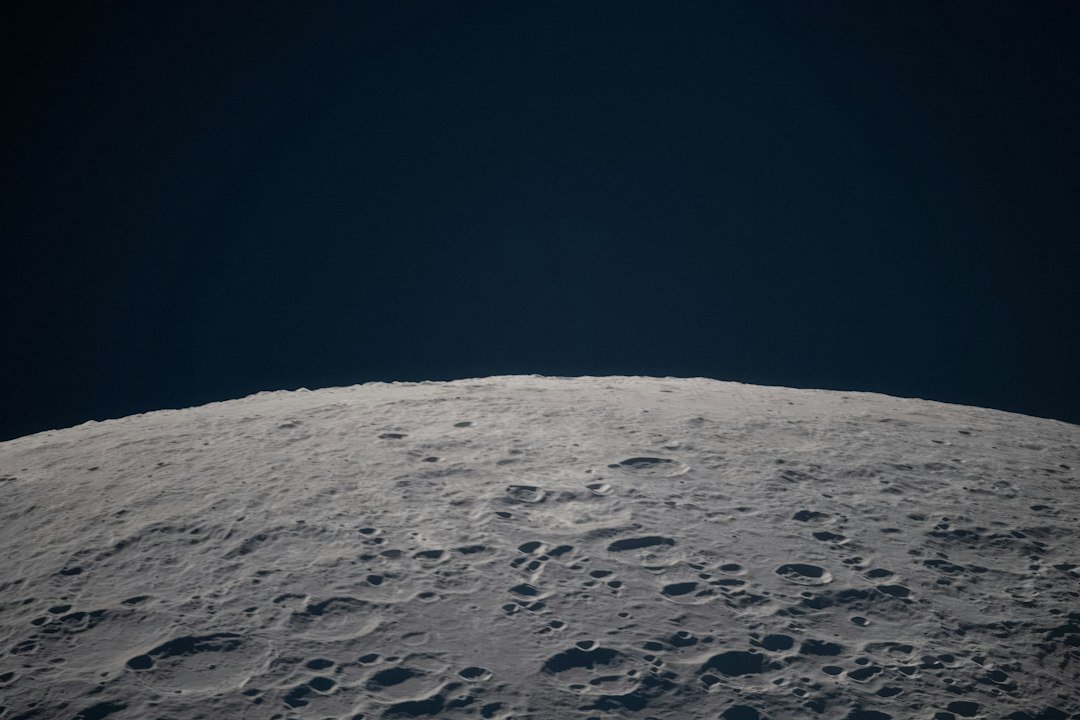
As more spacecraft, landers, rovers, astronauts, and communication systems operate around the Moon, space agencies are working toward Coordinated Lunar Time, often shortened to LTC. The goal is to create a common time standard for lunar activity, much as Coordinated Universal Time helps synchronize life and technology on Earth.
What is Coordinated Lunar Time?
Coordinated Lunar Time is a proposed time standard for operations on and around the Moon. It would give different missions a common reference for navigation, communication, data timestamps, and coordination.
NASA says it is working with international partners and standards organizations on a coordinated lunar time system that can support future exploration.
Why can’t the Moon just use Earth time?
Because time does not pass at exactly the same rate everywhere.
According to relativity, gravity and motion affect how quickly clocks tick. The Moon’s weaker gravity means a clock near the lunar surface does not stay perfectly synchronized with an identical clock on Earth.
The difference is tiny, measured in microseconds per day, but tiny timing errors matter enormously for navigation and communication systems.
How much faster does time pass on the Moon?
Published calculations put the difference at roughly tens of microseconds per day, depending on the precise reference surfaces and definitions being compared. That is far too small for a person to notice, but large enough to create problems for systems that depend on precise timing.
Modern navigation can turn a timing error of a few microseconds into a location error measured in hundreds of metres or more.
Why does lunar navigation need precise time?
Earth’s GPS works because satellites broadcast extremely precise timing signals. A receiver calculates its position by comparing when those signals arrive.
Future lunar navigation networks will need the same basic ingredient: clocks that agree on what time it is.
NASA’s lunar communications and navigation plans treat time as part of a larger positioning, navigation, and timing system for future missions.
Why is lunar time a major 2026 story?
The issue is moving from theory toward standards. NASA is developing its approach to lunar timekeeping, while international scientific and standards bodies are considering how a shared lunar reference should work.
In May 2026, the U.S. National Institute of Standards and Technology also highlighted research into ultra-stable lasers and clocks that could support precise navigation and timekeeping on the Moon.
Would astronauts set their watches to lunar time?
Possibly, but that is not the main purpose. Coordinated Lunar Time is primarily infrastructure.
It is meant to help machines and missions agree: when did a signal arrive, where was a spacecraft at that moment, when should an operation begin, and how should observations from different systems be synchronized?
Is this a lunar time zone?
Not in the everyday sense of Eastern Time or Pacific Time. A time zone is mostly a civil convention tied to daily schedules. Coordinated Lunar Time is closer to a technical reference standard.
Future lunar settlements might eventually create local schedules or civil conventions, but first they need a reliable underlying time scale.
Why this matters for the future of space exploration
The need for lunar time is a sign that exploration is becoming infrastructure. A single spacecraft can coordinate directly with Earth. A busy lunar environment with many governments and private operators needs shared rules.
Timekeeping is one of those invisible rules. So are communication standards, navigation coordinates, and data protocols.
As the Space desk grows, lunar time is likely to become part of a much larger story: how humanity turns the Moon from a destination into a place where many systems operate at once.
More on Coordinated Lunar Time and space infrastructure
For related space topics, read why lunar dust is a problem for Moon missions and how quantum entanglement can measure Earth’s rotation.