Can We Build Moon Bases From Lunar Dust? Regolith Bricks Explained
Sending a kilogram of building material from Earth to the Moon is expensive. Sending thousands of tonnes for walls, landing pads, radiation shielding and roads would be far worse. That is why engineers keep returning to a simple idea: if humans build on the Moon, much of the construction material should come from the Moon itself.
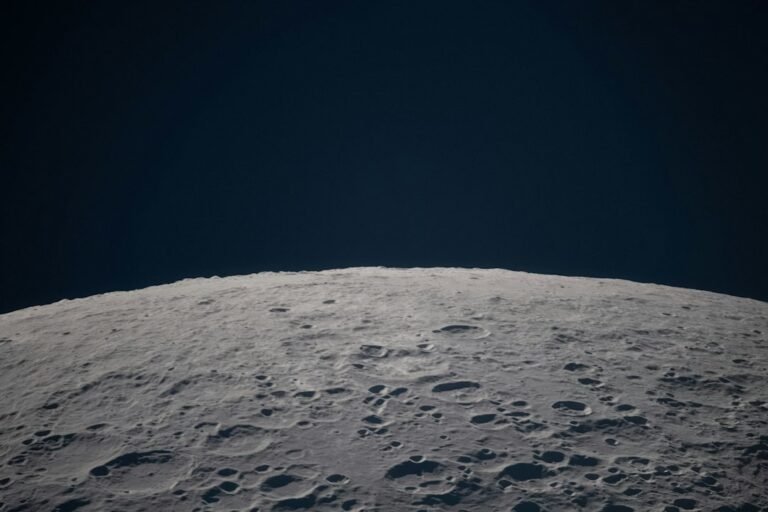
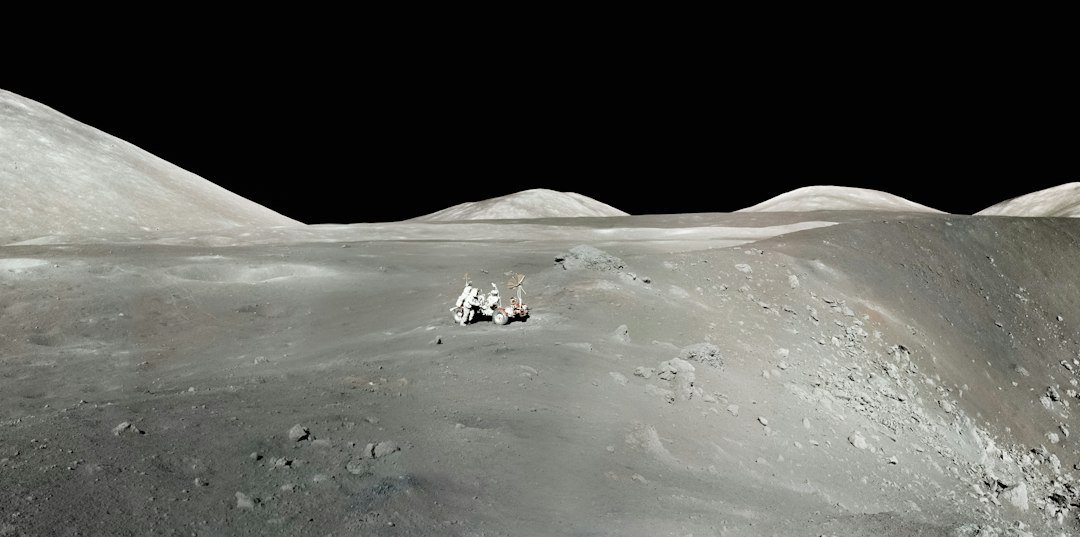
The obvious raw material is lunar regolith—the dusty, broken rock that covers the surface. Recent research is exploring ways to sinter, melt or print it into useful structures.
What are lunar regolith bricks?
Lunar regolith bricks are building units made primarily from processed Moon soil rather than material shipped from Earth. Proposed methods include pressing regolith, heating it until grains fuse together, microwave sintering, laser sintering and additive manufacturing.
A 2026 study in npj Advanced Manufacturing tested laser sintering of lunar-regolith simulant to create small interlocking building blocks. The researchers proposed reconfigurable pieces that could be assembled into larger structures without needing large amounts of extra joining material.
Why use lunar soil instead of importing concrete?
Launch mass dominates space logistics. Every structural component that can be made locally reduces what must be lifted out of Earth’s gravity well. Regolith is already abundant at the construction site and contains silicate minerals that can be fused into ceramic-like materials.
Local material could also provide radiation and micrometeorite shielding. Thick regolith walls or coverings may be more practical than trying to launch equivalent shielding from Earth.
Cosmic Teapot has already explored why lunar dust is such a difficult engineering problem and why future missions may need coordinated lunar time. Construction is another example of how permanent operations on the Moon create infrastructure problems that short visits can ignore.
How do you turn dust into a solid brick?
Sintering heats particles until their surfaces bond without necessarily melting the entire material. On Earth, manufacturers use similar principles in ceramics and powder metallurgy. On the Moon, concentrated sunlight, lasers or microwaves could provide heat.
Another approach is additive manufacturing: deposit or treat regolith layer by layer to create a shape directly. Large structures might be printed in place, while smaller standardized blocks could be manufactured and assembled by robots.
Why interlocking blocks are interesting
Printing an entire habitat sounds elegant, but a gigantic printer would be difficult to transport, maintain and repair. Small modular blocks allow a simpler manufacturing system to produce repeatable components. Damaged sections could be replaced, and structures could potentially be reconfigured as a base grows.
That modularity is the appeal of the 2026 interlocking-block experiments. It shifts the problem from “print a house on the Moon” to “manufacture reliable pieces and assemble them.”
What makes lunar construction difficult?
Real lunar regolith is abrasive and electrostatically sticky. The Moon also has vacuum, extreme temperature swings, radiation and reduced gravity. A brick that performs well in a terrestrial laboratory must still survive those conditions.
Energy is another constraint. Sintering requires heat, and large-scale construction would need substantial power. Machinery must also operate with minimal maintenance because replacement parts and human repairs will be limited.
Will the first Moon base actually be made of bricks?
Probably not entirely. Early habitats are likely to combine prefabricated pressure vessels from Earth with locally produced shielding, landing pads, berms and structural additions. Regolith construction may first appear in simple infrastructure where airtightness is not required.
But the logic is compelling. If lunar activity becomes permanent, using local material changes construction from a sequence of expensive deliveries into something closer to an industry.