How Bacteria Repair Concrete Cracks—and Their Limits
Bacterial self-healing concrete is cementitious material engineered to help seal certain cracks through microbial activity. When suitable bacteria have access to moisture and nutrients, they can promote the formation of mineral deposits—often calcium carbonate—that fill or bridge openings. Researchers hope this can slow water ingress and extend the useful life of structures.
It does not mean a damaged bridge or building can safely regenerate any amount of lost structural strength. Crack appearance, water tightness and restored load-bearing performance are separate engineering outcomes.
How the Microbial Crack-Sealing Mechanism Works
- Selected bacteria or spores are incorporated into the cementitious system, often with nutrients or protective carriers.
- Moisture reaches a crack, potentially activating microbial metabolism under suitable conditions.
- Metabolic reactions produce carbonate or change local chemistry in a way that encourages mineral precipitation.
- Calcium ions combine with carbonate to form deposits such as calcium carbonate (CaCO3).
- Minerals accumulate in pores or cracks, reducing the open pathway for water and aggressive chemicals.
Different strains and systems operate through different biochemical routes. High pH, dryness and limited nutrient availability can prevent effective healing. A promising organism in a flask may not survive embedding and curing inside real concrete.
Why Bacteria Need Protection Inside Concrete
Concrete is highly alkaline and can be a harsh environment for living cells. It is also dense, with limited room for nutrients and microbes to move. Researchers investigate carriers—lightweight aggregates, capsules, gels and even agricultural residues—that provide protected spaces until conditions activate the system.
Carriers introduce trade-offs. They may change workability, create additional pores or affect strength. The best formulation balances bacterial survival with the mechanical properties that engineers require from the material.
What the October 2026 Rice-Husk Study Found
An October 12, 2026 study evaluated Bacillus paramycoides immobilized on raw rice husk in mortar and concrete. The researchers tested different husk concentrations and reported improved crack-healing behavior relative to relevant controls, with microstructural evidence consistent with calcium-rich carbonate deposits.
One important qualification: the bacterial formulation did not exceed the 90-day compressive strength of the conventional control, according to the study abstract. It mitigated the losses associated with adding raw rice husk and improved some measurements relative to husk mixtures without bacteria. That is not the same as demonstrating universally stronger concrete.
The paper also reported changes in surface crack closure during controlled curing. Closing the visible opening does not, by itself, prove restoration of every structural performance metric. Follow-up measurements of permeability, durability, reinforcement corrosion and cyclic loading would matter for real deployment.
What Types of Cracks Might Be Suitable?
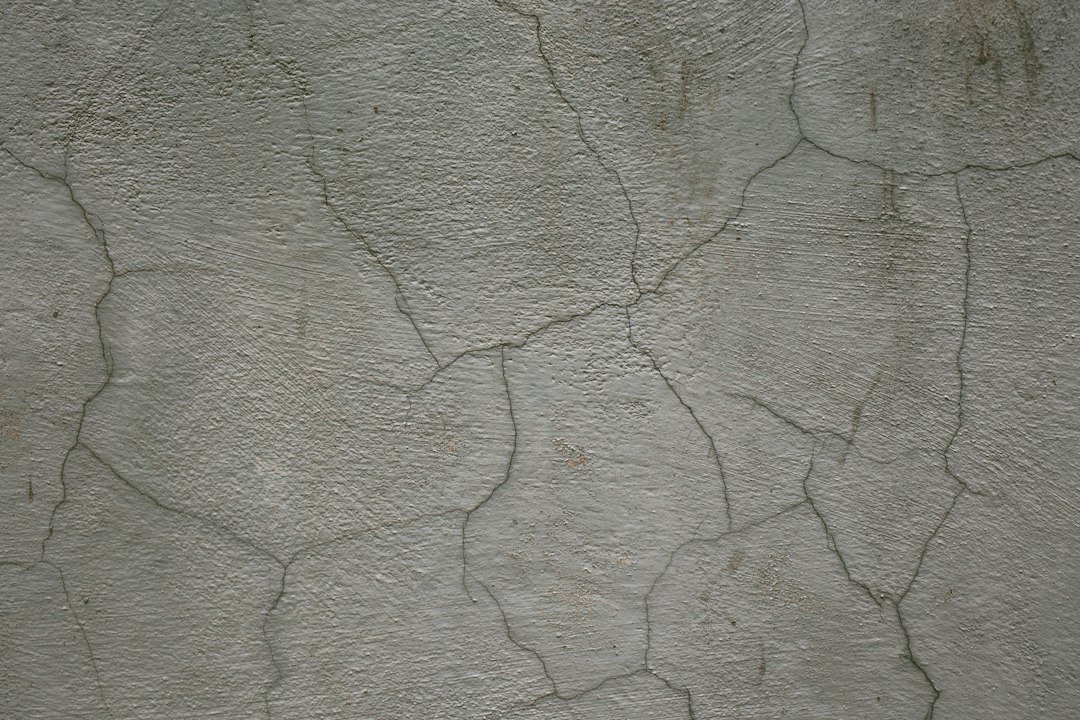
Research commonly focuses on small cracks or microcracks where mineral deposits can build up across an accessible gap. Water exposure, crack width, available nutrients and cycles of drying influence results. Very large cracks, continuing settlement, shifting foundations and active structural failures remain engineering problems that may require conventional repair.
| Claim | What it may mean | What it does not prove |
|---|---|---|
| Crack closed visually | Minerals covered or bridged a surface opening | Full original strength recovered |
| Reduced water permeability | Less water moves through tested specimens | Permanent sealing under all weather |
| Higher strength than a bio-carrier control | The microbial treatment improved that comparison | Outperformed ordinary concrete in every test |
| Bacteria survived | Viability under specific tested conditions | Reliable long-term survival in all structures |
Does It Really Reduce the Environmental Cost of Concrete?
Potentially, if self-healing extends service life and reduces the need for repairs or replacement. But biological carriers, extra processing and culture inputs also have environmental footprints. Strong sustainability claims need a full lifecycle comparison under realistic service conditions.
A material that performs well in a laboratory might still face difficult economics in large pours, long-term storage, winter climates or aggressive marine environments. Transporting and incorporating the formulation at industrial scale introduces quality-control questions not answered by small specimen studies.
What Must Researchers Test Before Broad Adoption?
- Crack widths and conditions in which healing reliably occurs.
- Repeated opening and closing rather than one static crack.
- Water tightness and resistance to chloride penetration.
- Mechanical strength before damage and after healing.
- Durability through freeze–thaw cycles and years of service.
- Biological and environmental safety of the production and application method.
FAQ
Can I add bacteria to a cracked driveway to fix it?
No general household treatment follows from this research. The bacterial formulation, carrier, nutrients and concrete composition are engineered together. A cracked structural element should be assessed appropriately before repair.
Does concrete contain living bacteria forever?
Some systems use spores or protected organisms intended to remain viable under certain conditions. Long-term survivability differs among formulations and has to be measured.
Is calcium carbonate the same as cement?
No. It is a mineral deposit that can fill space in a crack; it does not automatically reproduce the original cement microstructure or reinforce a damaged steel bar.
Research: Rice husk as a bio-carrier for Bacillus paramycoides (2026); Concrete, rice-husk ash and bacteria: microstructural study (2026). Related: sponge cities and water-resilient infrastructure and emerging technologies in building materials.