What Is Plant Molecular Farming? How Plants Can Become Biofactories
A field of plants is usually grown for food, fibre or feed. Plant molecular farming asks a different question: what if plants could be used as biological factories for valuable proteins and other molecules?
The idea is several decades old, but 2026 research is giving it renewed attention as scientists improve plant-based biomanufacturing and explore applications ranging from vaccines to food ingredients.
What is plant molecular farming?
Plant molecular farming is the use of plants or plant cells to produce recombinant proteins and other high-value compounds. Researchers introduce genetic instructions that cause the plant to make a target molecule, which can then be harvested and purified.
The plant is not necessarily the final product. In many applications it is the manufacturing platform—the biological equivalent of a fermentation vessel.
What can plants be engineered to make?
Research has explored antibodies, vaccines, enzymes, diagnostic reagents and other therapeutic proteins. Scientists are also investigating food-related uses, including proteins that could improve the taste or function of alternative dairy products.
That makes plant molecular farming an interesting cousin of precision fermentation. Both use biology as a manufacturing system, but one relies on organisms such as microbes while the other uses plant tissues or crops.
Why use plants as biofactories?
Plants can potentially offer lower-cost production, scalable cultivation and a reduced risk of contamination from some human pathogens compared with certain animal-cell systems. They can also perform complex biological processing that simple microbial systems may not reproduce easily.
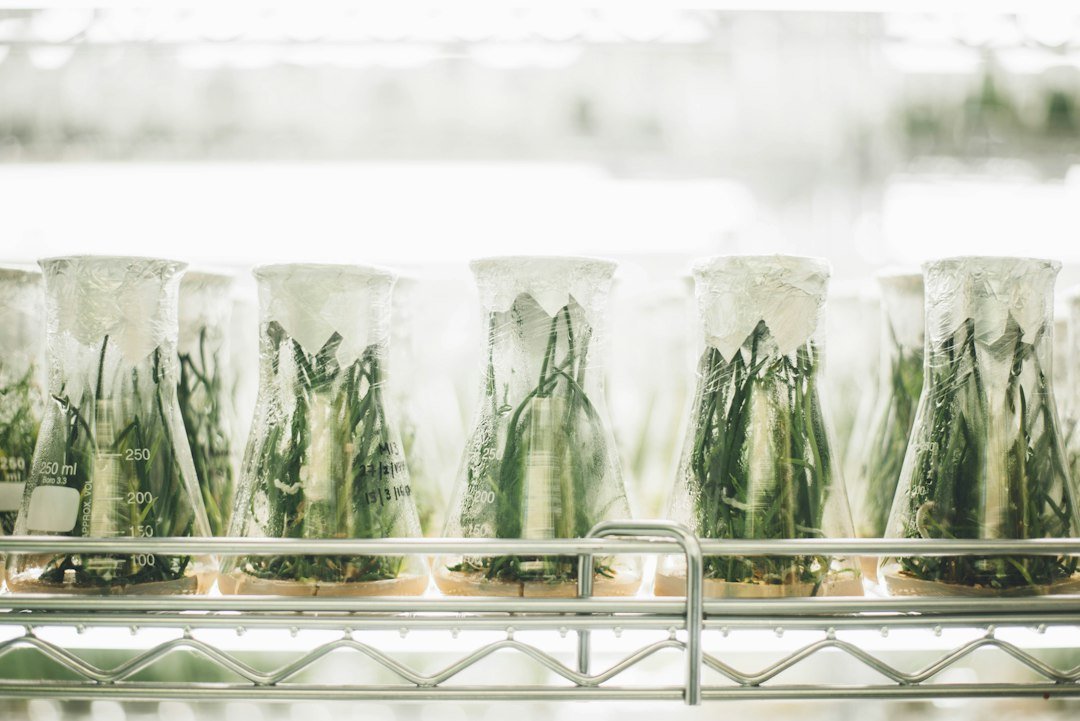
Researchers often use Nicotiana benthamiana, a relative of tobacco, because it grows quickly and is well suited to experimental protein production.
Why has commercialization been slow?
The technical promise does not automatically make production easy. Researchers still have to achieve reliable yields, extract and purify the target molecule, meet regulatory standards and prevent unintended mixing with ordinary food or feed crops.
Canada’s food inspection agency treats molecular farming as a distinct biotechnology area and notes that commercial field production has not been approved in Canada, although confined research has taken place.
What is changing in 2026?
A 2026 review in npj Science of Plants describes advances that could improve the medium- and long-term prospects of plant molecular farming, while other research is focusing on process design and industrial scale-up. The field is moving from proving that plants can make useful proteins toward asking when plant systems are economically competitive.
How does this fit the wider biomaterials trend?
Plant molecular farming is part of a larger shift toward growing or biologically producing materials that once came mainly from conventional industrial processes. Cosmic Teapot’s explainer on mycelium materials explores another branch of that bio-based design space.
The bottom line
Plant molecular farming turns plants into production systems for valuable molecules. It is not new, but better genetic tools and manufacturing methods are making an old idea newly relevant as biotechnology searches for flexible ways to produce medicines, ingredients and industrial compounds.