What Is Organoid Intelligence? Could Lab-Grown Brain Tissue Help Computing?
Organoid intelligence is an emerging research field that explores whether three-dimensional clusters of human brain cells grown in laboratories can be used to study learning, information processing and new forms of biological computing. The phrase can sound futuristic, but the current science is much more limited and careful than popular headlines sometimes suggest.
What is a brain organoid?
A brain organoid is a small three-dimensional tissue model grown from stem cells. It can reproduce some features of developing neural tissue, allowing researchers to study cell behavior and disease in ways that flat cell cultures cannot.
What does organoid intelligence add?
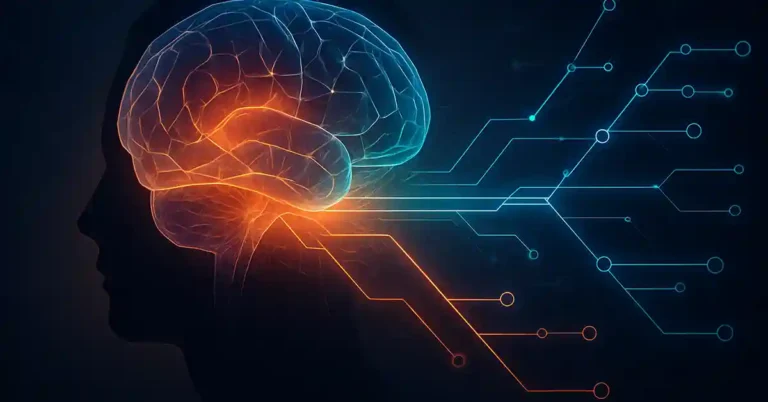
Organoid-intelligence research connects organoids with sensors, electrodes and computational systems. Scientists can record electrical activity and investigate whether neural tissue changes its responses after stimulation. The goal is partly to learn more about how biological networks process information.
Is this a tiny conscious brain?
No evidence shows that current organoids possess human-like consciousness. They lack the size, sensory systems, body, organization and developmental environment of a human brain. Ethical discussion remains important precisely because the models are becoming more sophisticated, but dramatic claims should be separated from demonstrated capabilities.
Why are researchers interested?
- Biological neural networks are extraordinarily energy efficient compared with many electronic systems.
- Organoids can model aspects of neurological development and disease.
- Studying adaptive biological networks may inspire new computing architectures.
- The work raises useful questions about how to measure learning in living tissue.
The bottom line
Organoid intelligence sits at the boundary of neuroscience, bioengineering and computing. Its most immediate value may be as a research platform rather than a replacement for silicon computers.
Explore more emerging research in Science & Discovery.