Gondola Wish vs. Grill Flame: The Remote-Viewing Timeline
Gondola Wish vs. Grill Flame refers to two connected names in the history of U.S. military interest in alleged psychic intelligence techniques. The strongest evidence for their existence is not a paranormal claim: it is the declassified government paperwork describing why officials explored these ideas, which offices were involved, and how the programs changed.
What was Project Gondola Wish?
A declassified chronology dates the establishment of GONDOLA WISH to September 1977. It describes an Army operations-security effort that examined potential vulnerability to alleged foreign “psychoenergetic” collection capabilities. This was a response to a perceived intelligence concern, not proof that such capabilities worked.
What was Grill Flame?
The same record states that the unclassified cover name GRILL FLAME was established in July 1978, and describes subsequent Army activity examining applications of remote viewing. By 1979, there were formal questions about human-subject procedures and institutional oversight. A separate declassified Center Lane memorandum traces those issues and the later transition in organizational responsibility.
Timeline: Gondola Wish to Grill Flame
| Date | Event recorded in government documents |
|---|---|
| September 1977 | Gondola Wish established as an Army operational-security inquiry |
| July 1978 | Grill Flame cover name established in Army records |
| October 1978 | INSCOM tasked to develop an intelligence-related effort using remote viewing |
| 1979 | Training and human-subject oversight concerns recorded |
| 1982–1983 | Later records describe the move toward Center Lane |
Dates here follow the cited memoranda, which document administrative actions. Different secondary chronologies may use broader program periods or group overlapping efforts under the later umbrella name “Stargate.”
Did the CIA run both projects?
The archive containing these papers is maintained by the CIA, but archival custody is not the same as direct operational control. Gondola Wish and Grill Flame records describe involvement by Army and Defense Intelligence organizations, with changing responsibilities. It is more accurate to identify the responsible agency for each period than to call every remote-viewing activity a single CIA project.
Did the documents prove remote viewing worked?
No. A document showing that officials funded or performed an experiment demonstrates that an activity happened. It does not establish that the underlying paranormal explanation is scientifically valid. Some released reports record failures, uncertain interpretation and debate over procedures. Historical interest, intelligence claims and rigorous evidence of anomalous perception are separate questions.
What followed Grill Flame?
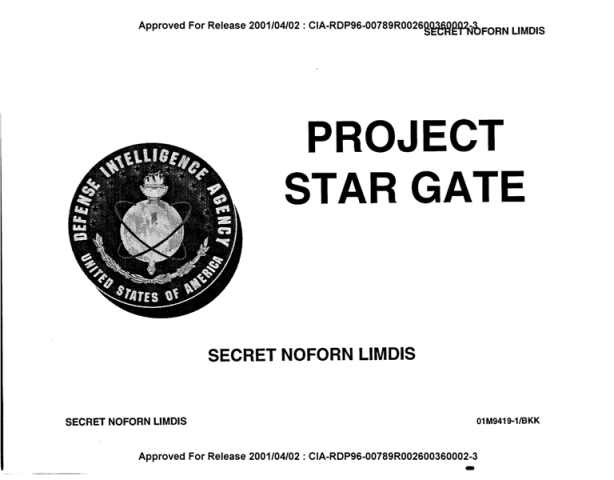
Later phases were associated with names such as Center Lane, Sun Streak and Star Gate, depending on the period and sponsoring organization. These should not be flattened into one uninterrupted program without checking each archival source.
How to read the documents critically
- Start with the document number and creation date, rather than a social-media summary.
- Note who wrote the record and which organization it addresses.
- Separate an official’s assertion from independent experimental confirmation.
- Read failures and procedural concerns as carefully as successes.
- Distinguish the document’s original date from its later declassification or online release date.
For the broader story and popular claims, see our earlier Gondola Wish and Stargate overview.
Primary documents: Army program chronology; Center Lane approval procedures; Grill Flame briefing.