Paleoproteomics vs. Ancient DNA: What Can Each Reveal?
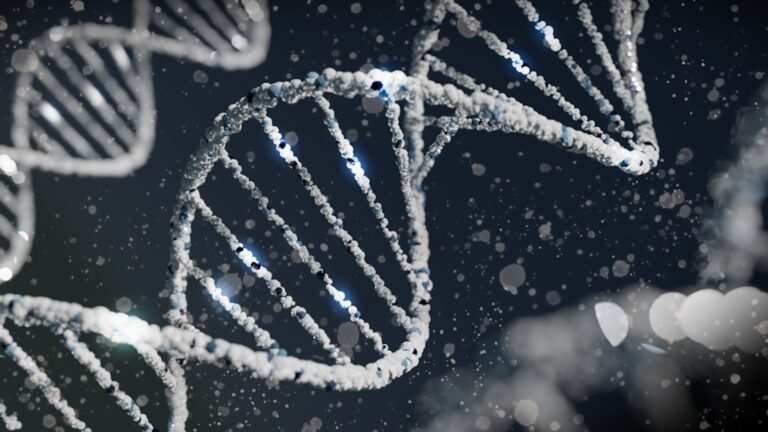
Paleoproteomics vs. ancient DNA: both recover biological information from old remains, but they investigate different molecules. Ancient DNA analyzes surviving genetic material, which can reveal ancestry, relatedness and genetic variation when enough DNA remains. Paleoproteomics analyzes surviving proteins or peptides, often from dental enamel, and can sometimes provide species-level or evolutionary clues where DNA has degraded beyond recovery.
Neither method is a time machine or a complete portrait of an ancient person. The available evidence depends on preservation, contamination, the reference databases and the specific scientific question. For the basics, see our paleoproteomics explainer and ancient DNA and migration guide.
Ancient Proteins vs. Ancient DNA at a Glance
| Question | Ancient DNA | Paleoproteomics |
|---|---|---|
| Main material | Damaged fragments of DNA | Surviving proteins or peptide fragments |
| Common samples | Bone, tooth, sediment and other preserved material | Dental enamel, bone, shells and some archaeological residues |
| Typical analysis | Sequencing and computational genomics | Mass spectrometry and peptide identification |
| Strength when preserved | Fine-scale genetic relationships and population history | Taxonomic clues and selected evolutionary relationships |
| Major limitation | DNA degrades under many environmental conditions | Fewer informative sites than a whole genome; contamination |
Why Dental Enamel Matters
Tooth enamel is highly mineralized. Some proteins trapped in its structure survive surprisingly long after death. A Nature Protocols workflow explains how mass spectrometry can recover highly degraded enamel protein fragments and compare amino-acid sequences across species. In temperate and subtropical settings, informative enamel proteins have been recovered from specimens roughly two million years old—well beyond the commonly recovered DNA age range in those particular environments.
That is not a universal age limit for either molecule. Exceptionally favourable cold conditions can preserve DNA longer than in temperate soils. The nature of the sample and its burial history matters.
What Can Ancient DNA Tell Us?
If sufficient DNA survives and contamination is controlled, sequencing can help researchers identify kinship, genetic sex, migrations, admixture and how some inherited traits changed over time. A 2026 Nature Genetics review describes how ancient genomes have been used to examine changes associated with diets, pathogens and population movements.
However, a genome is not a direct record of language, culture or identity. Genetic ancestry and archaeological interpretation are related but distinct questions. Neither can replace historical context or consultation with communities connected to studied remains.
What Can Ancient Proteins Tell Us?
Proteins contain amino-acid sequences that can sometimes distinguish lineages or species. Researchers digest or directly recover peptide fragments, compare mass spectra with known sequences, and evaluate whether the matching evidence is genuine. Some proteins can indicate biological characteristics such as certain sex-linked enamel proteins, but the molecular information is generally narrower than a sufficiently complete genome.
Researchers also study proteins in food residues and artefacts, which can reveal ingredients or materials even when DNA is difficult to recover. These identifications need appropriate contamination controls and reference libraries.
A 2026 Example: Identifying Denisovan Remains
A September 2026 Nature paper reported ancient protein evidence identifying multiple Denisovan remains from Southwest China. By comparing peptide sequences and evaluating their preservation, the researchers expanded the biological evidence available for a group whose fossil record is sparse.
The study is an important example of proteins contributing to taxonomic identification. It does not imply paleoproteomics can recreate a full Denisovan genome or provide the same population-level detail as a high-quality ancient DNA dataset.
How Scientists Guard Against False Identifications
- Clean handling: limit modern contamination in sampling and laboratory work.
- Molecular damage checks: evaluate whether recovered fragments show evidence consistent with old material.
- Sequence specificity: test whether peptides truly distinguish between competing species assignments.
- Reference quality: investigate how incomplete comparison datasets might affect interpretation.
- Independent context: compare molecular results with stratigraphy, dating and anatomical observations.
A 2025 Scientific Reports study of enamel contamination illustrates why apparently strong matches can still require careful filtering.
When Should Researchers Choose One Method?
Ancient DNA is particularly informative when adequate genetic material survives and the question concerns ancestry or genomic relationships. Proteins may be the better option for older or warmer-context samples and some material-identification tasks. Sometimes both are combined, alongside microscopy, isotopes and conventional archaeology, because each method answers a different piece of the puzzle.
Frequently Asked Questions
Are ancient proteins a form of DNA?
No. DNA stores genetic instructions; proteins are molecules built from amino acids that perform many biological functions.
Can enamel proteins reveal a person’s entire ancestry?
No. They can preserve selected inherited sequence differences, but usually much less information than a well-recovered genome.
Is either method destructive?
Many sampling methods consume a small amount of material. Ethical permissions, conservation concerns and minimizing damage are important parts of study design.
Research: Deep-time enamel paleoproteomics protocol; 2026 Denisovan ancient protein study; 2026 ancient DNA review.