Hubble’s Missing Oxygen: What 37 Dwarf Galaxies Reveal
NASA’s November 2, 2026 announcement about missing oxygen in 37 dwarf galaxies describes a real astronomical puzzle, not oxygen mysteriously vanishing from the universe. The Galaxies Losing Oxygen via Winds (GLOW) team compared the oxygen that generations of stars should have produced with the amount remaining in their galaxies. In the sample, galaxies retained an average of about 11% of that oxygen. The leading explanation is that energetic stellar winds and supernova explosions carried much of it outward—but precisely where it ended up is still being investigated.
What NASA announced on November 2, 2026
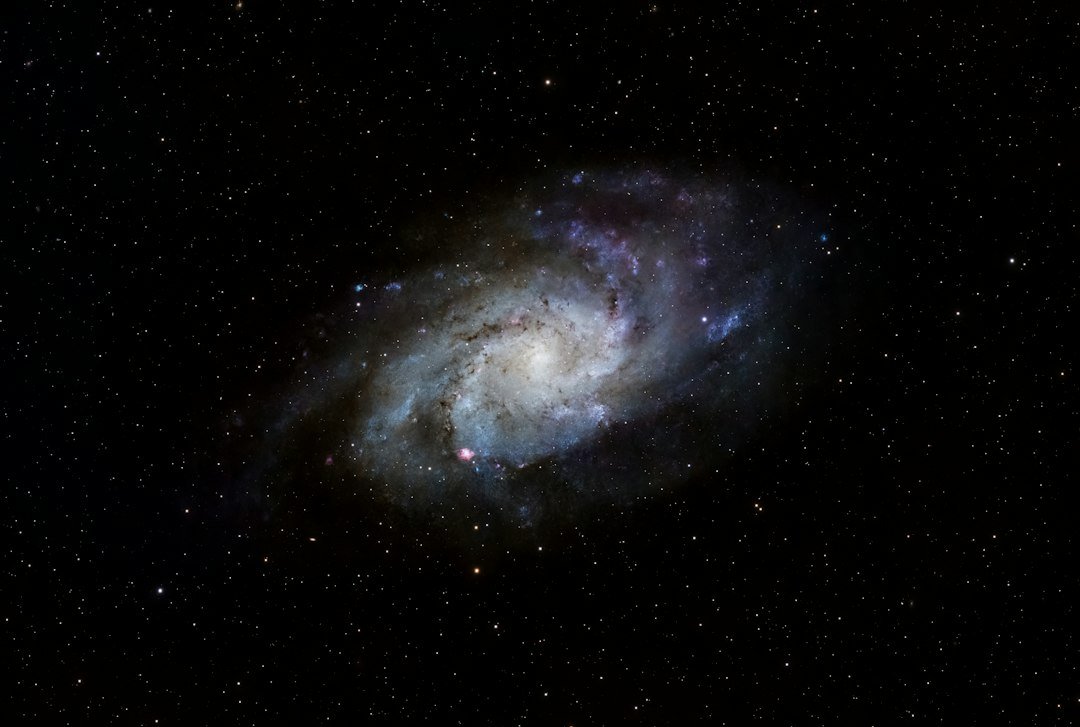
NASA publicized a new study in The Astrophysical Journal examining 37 nearby, gas-rich, low-mass galaxies. The sample includes NGC 4449, a vigorously star-forming dwarf galaxy photographed by Hubble. The work belongs to GLOW, a project whose name explicitly describes its focus on galactic winds and oxygen loss. This article independently explains that NASA announcement; it is not a NASA press release or a statement issued by the researchers.
Why a dwarf galaxy might lose oxygen
Stars manufacture oxygen through nuclear reactions over their lifetimes. Massive stars can then return oxygen-rich material to surrounding gas, especially through their final explosions. Such supernovae inject energy into interstellar matter. Repeated bursts can push gas out of the central galaxy in what astronomers call a galactic outflow or wind. A dwarf galaxy’s weaker gravitational hold makes the process particularly consequential. The missing material could remain in a diffuse halo surrounding the galaxy, circulate back later, or escape into intergalactic space.
How astronomers calculated an oxygen budget
This is not a case of photographing individual oxygen atoms flying away. Hubble’s archived optical images are sharp enough to distinguish many individual stars in these nearby galaxies. Researchers used the stars’ colours and brightness to reconstruct star-formation histories: a record of how many stars formed and when. Models of stellar production then estimate the oxygen those stars generated. Observations of gas, dust and stellar material help estimate what remains today. The team drew on Hubble, the retired Spitzer Space Telescope and radio observations from the Very Large Array and Australia Telescope Compact Array. Each measurement has assumptions, but together they provide a more informative accounting than a single photograph.
What the 4%–25% retention figures mean
The team’s research reports that the 37 low-mass galaxies retained roughly 4% to 25% of their estimated oxygen production, averaging about 11%. These percentages are not the fraction of a galaxy’s atmosphere made of oxygen, and they are not percentages of oxygen disappearing from all of space. They describe how much of the oxygen forged by stars remains in the inventory of a given galaxy. Nearly all the retained oxygen was found in gas. The apparent shortfall is especially striking because some simulations predicted these galaxies would retain substantially more.
A quick comparison: observation versus interpretation
| What the study found | What it suggests—but does not prove |
|---|---|
| 37 nearby low-mass galaxies have low oxygen retention. | Galactic outflows may be stronger or more effective than some models assume. |
| Average retention is about 11%. | Much oxygen likely left the galaxies, but its final location is unresolved. |
| Retention varies among galaxies. | Neighbouring galaxies and local environment may influence how gas is recycled or expelled. |
Separating measured results from proposed mechanisms is essential. A striking number can be reliable even when the full physical explanation is incomplete.
Where could the missing oxygen be now?
One candidate reservoir is the circumgalactic medium, a large, diffuse region of gas around a galaxy. Some oxygen is detectable there in ionized form. But the GLOW authors say it is not yet clear whether that surrounding medium holds most of the missing oxygen or whether much of the material has been expelled farther into intergalactic space. Future observations and improved models could help distinguish these possibilities. The word ‘missing’ is therefore an accounting term, not evidence of an impossible disappearance.
Why this matters for understanding galaxies
Astronomers use chemical elements as historical clues. The oxygen in gas affects how efficiently it cools, and cooling influences how gas can collapse into new stars. If dwarf galaxies lose enriched material more readily than simulations predict, models of galaxy growth, feedback and chemical evolution need refinement. The study also suggests environmental differences may matter: dwarf galaxies near more massive neighbours do not necessarily evolve in the same way as isolated dwarfs. That makes this result useful far beyond the specific 37 objects examined.
How to evaluate a dramatic astronomy headline
When a headline says something is ‘missing,’ ask three questions: missing from where, compared with which prediction, and measured how? Here, the missing oxygen is missing from a galaxy’s calculated present-day budget. The prediction comes from reconstructed star formation and stellar-yield estimates; the measurements come from multiple observatories. Readers curious about the challenges of studying other worlds can also explore Cosmic Teapot’s lunar regolith bricks explainer and its article on why lunar dust complicates Moon missions. Both illustrate how scientific claims depend on what instruments can actually observe and test.
Frequently asked questions
Did Hubble find that oxygen is disappearing from the universe?
No. Researchers found less oxygen inside 37 dwarf galaxies than their stars are estimated to have produced. The oxygen may have been transported into surrounding space.
Why study oxygen rather than every element?
Oxygen is relatively abundant among elements heavier than helium, and astronomers can measure it in gas, making it a useful tracer of chemical enrichment.
Is the missing oxygen dangerous for Earth?
No. The study concerns the evolution of distant dwarf galaxies, not a change to Earth’s breathable atmosphere.
Is the explanation settled?
No. Stellar winds and supernova-driven outflows are strongly motivated explanations, but the final distribution of the missing oxygen remains uncertain.
Original sources and further reading
- NASA, November 2, 2026: Hubble’s missing-oxygen announcement
- Space Telescope Science Institute: official 2026 news release
- McQuinn and collaborators: GLOW II, oxygen census and retention measurements
- GLOW I: sample measurements and methodology
- University of Utah, November 4, 2026: researcher perspective